

Choosing the right charcoal grill is the key to opening and maintaining a fast, efficient and successful operation in high demand culinary settings; restaurants, catering services, outdoor BBQ events. Erratic or slow ignition may cause order hold-ups, fuel wastage and uneven flavour. Whereas at home the cook can test the new lighter fluid or other home devised aide, professional kitchens would have to rely on repeatable, safe, high performance techniques.
This guide tells us the best way to start a charcoal grill, using commercial grade approaches and professional author comments, and we also introduce the sourcing information regarding high quality lump charcoal as used by Vietnam Charcoal.
Why starting the grill right matters in commercial BBQ settings
Whether in a busy commercial kitchen or large-scale BBQ establishment, how you light your charcoal grill can directly interfere with your kitchen’s flow or the dining experience. With every minute being important, uneven or slow fire start can make orders slow, staff become frustrated and customers get less satisfied. In the time when dinner has to be right on time, or the temperature has to be perfect to serve 300 (or more) people at a catering party, guesswork is a luxury that chefs can ill afford.
Besides speed, the structural factor is the lighting process which is also important with respect to fuel efficiency. The inefficient start-up of the grill might require additional charcoal to bring the desired temperature leading to higher overheads in addition to disturbance in inventory management. In restaurants that use tens of kilograms of charcoal per night, the cost of a minor inefficiency increases very rapidly.
Then there is the issue of uniformity of taste. A grill which fails to reach the optimum heat regions in time-or burns unevenly- can result in steaks, over-charged at some points, and uncooked at others. Consistent heat is a must in the hands of the chefs who want perfect sear or slow-cooked ribs. Additionally, in case chemical starters or lighter fluid are incorporated to save time they may give off unpleasant odours that can interfere with tastes of smoked meat since they contain artificial flavours.
With B2B when learning about the best way to start a charcoal grill, in particular a franchise or mobile BBQ operator, it is important to train the employees to light charcoal using a dependable, repeatable process. Lack of consistency among employees will result in uneven performance, which is not what any brand of restaurant desires on the customer service side.

Choosing the right charcoal – Lump charcoal vs sawdust for use
There is not just any charcoal when searching for the best way to start a charcoal grill. The type of fuel you use has a great impact on the way you start it off and the results are pretty much the way you cook.
Lump Charcoal
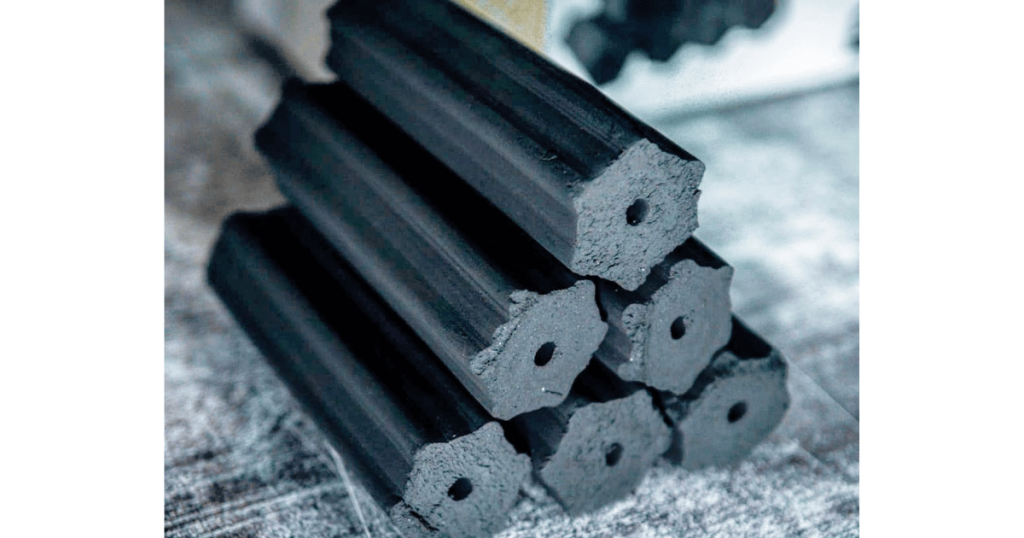
Lump charcoal is the choice of many professional chefs and commercial BBQ operators with a good reason. Lump charcoal is made by carbonizing natural hard woods such as oak, lychee or acacia to light quicker and burn hotter than briquettes. This largely qualifies it for high-output kitchen use or outdoor services, where productivity and speed of service are key variables dependent on how long it takes to achieve cooking temperature.

The other major importance of lump charcoal is that it is clean. Having no binders or chemical added ingredients, it has a minimal smoke and minimal ash resulting in better airflow and easier cleanup. Its high heat production, which in many cases tops 1,100F, means cooks can get seared steaks perfectly without using flare-ups or quick-cook-through on fast-turning skewered meats.
Lump charcoal is responsive as well. After practice, a chef is able to manipulate grill temperature by regulating air vents and coal hugging around, unlike briquettes, where this is a difficult task to accomplish. Such flexibility is critical in business environments where various hot spots are required by individual menu items.
Sawdust charcoal
Sawdust charcoal are frequently applied in house barbecues and informal grill-outs, however, their field of application in business is rather limited. Sawdust is composed of compressed charcoal dust and usually a combination of fillers, binders, and occasionally even chemical-based accelerants to enable slower and more stable burning than lump charcoal itself. The gradual steady burning is useful in low maintenance cases like slow smoking or where the maintenance of fuel costs is a primary concern.
Those are, but sawdust has trade-offs. They are usually slower in ignition, and some may not reach full heat until 2030 minutes in a busy kitchen which may require more time to prepare food. They also generate greater ash, which blocks air which calls upon frequent clean up, particularly when they have multi-hour run-outs of services.
Sawdust may also have non-wood additives that may impose undesired flavor to food, a factor that most chefs do not want to take chances with when it comes to quality and consistency. In the case of high-end restaurants and hotels and more so as compared to export-oriented BBQ brands, the purity of flavor cannot be compromised in any way and sawdust is mostly a forgotten factor.
With that said, professionals choose Lump charcoal. Since,lump charcoal provides a quick heating option which makes it best suited to chefs who have the need to sear meats on a remarkably high temperature. It also can control temperatures more finely- need to have temperature control to cook the ribs slowly or to sear steaks. A lot of commercial kitchens including the ones on BBQ Pitmasters now use lump charcoal because of its performance.
Vietnam has emerged to be a large exporter of high-quality hardwood lump charcoal, especially that of woods such as lychee, longan, and acacia. Such brands as Vietnam Charcoal provide: low moisture levels ( less than 8%) that burn easily; high BTU values ( as much as 7,000 kcal/kg) to give consistent and robust heat; minimal smoke and clean-burning capabilities- suitable to indoor or semi-constrained systems.
Step-by-step: The best way to start a charcoal grill
Standardized startup procedure is important in the art of professional grilling. This is a commercial grade (or as recommended by grill manufacturers such as Weber and as employed with the chef community):
Tools needed:
- Charcoal chimney starter
- Natural firelighters (e.g., waxed wood shavings, compressed sawdust cubes)
- Tongs and heat-resistant gloves
- High-quality lump charcoal
As soon as the firelighters are situated under the chimney and are lit, the heat will start to rise up the column of charcoal. In five to ten minutes you will observe the lower coals to go red and the upper layers to begin to catch. It takes about 15 minutes to have the whole chimney prepared to be poured into the grill, by that time the upper coals should still have an even reddening and a light ashy fire on the surface. In commercial kitchens that have oversized grills, one will often preheat two chimneys to a cooking temperature at one time.
When the coals become ready, they are poured into the base of the grill and evenly distributed- or not so evenly, in case you are arranging two cooking areas. It could be loaded with additional charcoal to sear the food with high temperatures on one side and the other could be kept at a lower temperature to hold or cook indirectly.
The lid is covered and closed alone with the grill grates with each other within five to ten minutes in order to enable the heating of the whole chamber uniformly. During the process, most commercial grills at this stage should be at a temperature of between 450 and 650 degrees, considering this because of the load and the airflow configuration.
It is worth mentioning that time is the essential thing in a restaurant setting. Using lump charcoal and chimney starter methods, the time to go from ignition to cooking readiness usually is between 20 and 25 minutes or even less, than with briquettes or slower-starting systems state-of-the-art. Also, keeping your lighter fluid away ensures the integrity of what you are cooking, and using adequate airflow keeps your grill equipment healthy.
When the charcoal is going well and your heat zones set up, you are ready to cook. Whether it is a lunchtime rush at a gastropub, or a 200 person catering, this technique can help precondition your grill so it is ready to perform, cook safely, and be consistent within its flavor.
Pro tips from Vietnam Charcoal:
- The preheat time (rev of ignition to cook readiness) is 20-25 min. using lump charcoal.
- Also do not reuse wet charcoal or charcoal containing white mould- this will influence ignition as well as food safety.
- Vacate an ash leftover in past sessions so that air can circulate.

Conclusion
That’s all about the best way to start a charcoal grill. There is more to a beginner charcoal grill than simply lighting a fire in a commercial kitchen that has to meet deadlines and the extreme demands of commercial kitchens. Careful selection of fuel and the systematic approach to ignition allow the cooks and the operators of the grills to take their Barbecue business to a new level and save on resources and time.
In the case of B2B customers as well as commercial consumers, buying a lump charcoal supplier is the answer. Vietnam Charcoal provides the efficiency and trust required in the current speedy foodservice business.


 English
 العربية
 日本語
日本語 한국어
한국어