

The Middle East has become one of the most promising markets to export charcoal products as a result of the various grilling culture, hospitality industries, and growing domestic spending. To the exporters seeking to exploit this region, it is very important to know the subtleties of the market, the kind of charcoal that is being demanded, the quality standard, and the logistics needed. The charcoal guide is an in-depth exporter of charcoal in Vietnam to Middle Eastern customers, it is everything you need to know to be successful.
Why the Middle East is a key market for charcoal export
The charcoal market has been driven by the popularity of the barbecue (BBQ) culture and outdoors cooking in the Middle East leading to a constant demand for quality charcoal. Countries like UAE, Saudi Arabia, Qatar, Kuwait, Jordan, and Lebanon are the major importers of wood charcoal due to commercial purposes in restaurants and home consumption.
The demand in the area can be explained by the following reasons:
- BBQ Grilling Culture: Grilling is done all year-round as the climate is warm and the lifestyle is social. Catering businesses and restaurants are dependent on charcoal which burns over a long period of time.
- Willingness to use Natural Fuel: The consumers are shifting towards natural and greener fuels, and this increases the demand of lump charcoal and briquettes of good quality.
- Market Growth: The region of the Middle East has a rising population and charcoal cuisine is widely expanding, making it an attractive market to provide charcoal to the market at all times.
Exporters who have the capacity to deliver quantity, quality products are in a position to form long term relations in this region.
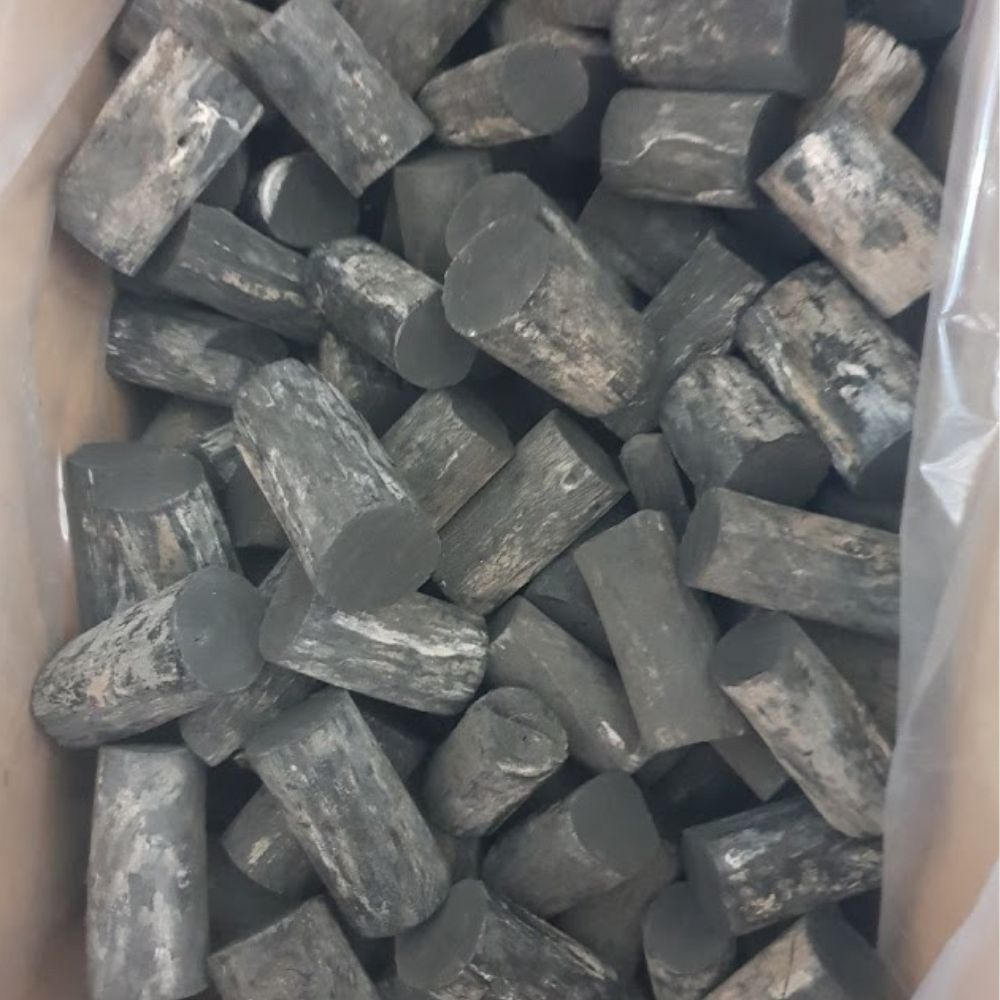
Types of charcoal popular in the Middle East
Understanding the types of charcoal in demand is crucial for exporters. This section of our charcoal guide explains lump charcoal, briquettes, white charcoal, and bamboo charcoal preferred by Middle Eastern buyers.
Lump charcoal
- Characteristics: High calorific value, minimal ash, natural form.
- Applications: Ideal for commercial and premium BBQ settings, home use, and upscale restaurants.
- Benefits: Burns hotter and longer, produces less smoke, and is highly sought after by Middle Eastern buyers for quality grilling experiences.
Briquettes
- Characteristics: Uniform size, easy to handle, consistent heat output.
- Applications: Large-scale events, restaurants, and food service businesses.
- Benefits: Long burn time, reliable performance, and easy storage/transportation for bulk buyers.
White charcoal (Binchotan)
- Characteristics: Made from hardwood, extremely dense, burns slowly, produces almost no smoke.
- Applications: Premium dining experiences, Japanese BBQ restaurants, high-end catering.
- Benefits: Eco-friendly, high-end product preferred in markets with sophisticated taste for grilling.
Bamboo charcoal
- Characteristics: Produced from bamboo, renewable, eco-conscious.
- Applications: Culinary use, industrial applications (e.g., air purification, activated carbon), and eco-friendly BBQ options.
- Benefits: Minimal smoke, sustainable alternative to hardwood charcoal, growing popularity among environmentally conscious consumers.

Quality standards and import requirements
Adhering to strict quality standards is a key part of any successful export. Our charcoal guide outlines the essential specifications and certifications needed for Middle East shipments.
The important quality parameters are:
- Fixed Carbon Content: Lump charcoal has a fixed carbon content of 65-75% to be guaranteed to have long burn time and high levels of heat.
- Moisture Content: It must be lower than 8 percent to avoid the formation of excessive smoke and keep the efficiency of combustion.
- Ash Content: Less than 5% of lump charcoal, less than 10 percent of briquettes.
- Volatile Matter: 1530% depending on charcoal type and finished use.
- Calorific Value: 6,500 kcal/kg minimum when grilling and using in industries.
Certificates and Compliance:
- Phytosanitary Certificate
- Certificate of Origin
- SGS or BV Inspection Reports
- Lab test results verifying heavy metal limits and emissions
Every country of the Middle East might have its own importing regulations, packaging standards, and HS codes (Clients may be subject to HS 4402). To prevent delays during the export process, exporters should provide all the necessary documentation to gain trust in buyers.

Charcoal guide for packaging and logistics considerations
Proper packaging and logistics are essential for maintaining charcoal quality. This part of the charcoal guide provides insights on containers, bags, and seasonal shipping considerations. The exporters going to the Middle East are expected to adhere to these rules:
- Packaging: Moisture proof bags, sealed containers, kraft bags, PP bags or cartons. A big percentage of buyers demand personal branding of packaging.
- Storage: Store charcoal in clean and dry conditions and without contamination when warehousing and transporting.
- Shipping: By sea, mainly through 20ft and 40HQ containers. Effective logistics planning will guarantee the delivery on time and will eliminate the damages of shipments.
- Seasonal Planning: Peak consumption seasons and lead times, should be considered to keep the supply uninterrupted.
Exporters, which provide flexible packaging and shipping solutions are known to have a competitive edge in the Middle East market.
Common challenges and practical solutions
Exporting charcoal comes with its challenges. The charcoal guide highlights practical solutions to common issues such as quality control, import procedures, and price fluctuations.
Challenge 1 – Consistent quality control
Problem: Quality of charcoal will be a problem since it can influence customer satisfaction and repeat business.
Solution: Collaborate with the factories that practice stringent quality control measures, such as lab tests, moisture checks, and the carbon content checks.
Challenge 2 – Complex import procedures
Problem: There are various customs laws and certification rules in different nations.
Solution: Have an outside team that would be used as a collaborator in terms of planning the exports or the clearance of Middle Eastern regulations.
Challenge 3 – Price fluctuations and shipping costs
Problem: Change in profitability due to fluctuating prices of raw materials and freights.
Solution: Sign long-term agreements with suppliers and customers, organize logistics in advance and negotiate bulk shipment.

Vietnam Charcoal – Reliable supply partner for the Middle East
Vietnam Charcoal has become a reliable business partner to international B2B customers offering quality lump charcoal, briquettes, white charcoal, and bamboo charcoal to meet the needs of the Middle Eastern markets. The company is well able to provide between 30 and 100 40HQ containers monthly, and this means that the bulk buyers would have a reliable and steady supply of containers.
Vietnam Charcoal has laid a lot of emphasis on sustainable production whereby the processes employed are environmentally friendly and the company has a commitment to environmental responsibility. All goods are of international quality and where necessary, they are accompanied by some of the various certification marks like ISO, SGS and FSC to ensure safety, performance and sustainability.

Vietnam Charcoal also has an opportunity to learn the peculiarities of Middle East purchases and provide their own packaging, such as branded bags, cartons, and other personalized products to fit the specifications of clients. The company, having a long history of export to the Middle East, also means that the transactions can proceed without any difficulties and that the company is skilled in working with regulations, customs, as well as logistics, which make the process of purchasing a product as easy as possible.
Vietnam partnership with Charcoal means that the buyers can find a supplier that delivers high quality and predictable supply of charcoal without the hassle of having to contend with supply and quality variability, and hence this makes it the best partner to serve the Middle Eastern market with their high quality products.
Conclusion
The charcoal exporters find the Middle East an attractive market because the market has a rising demand, cultural inclination towards grilling and a taste towards high quality of fuel. Exporters can create a long-lasting relationship in the region by knowing the needs of the market, selling the appropriate kind of charcoal, maintaining quality standards, and efficient logistics.
This charcoal guide has identified the key principles of good export, such as charcoal types, standards, packaging, transportation, and suggestions on how to address the most common issues in practice. The international buyers have no reason to worry about sourcing the bulk charcoal to satisfy the needs of the Middle Eastern market with the help of Vietnam Charcoal.


 English
 العربية
 日本語
日本語 한국어
한국어